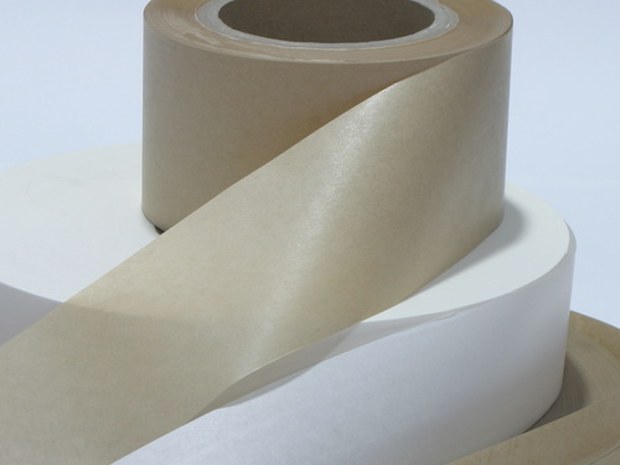
About this grade
What it is.
A CTP plate is coated and light-sensitive, so the sheet stacked against it has to be clean and dimensionally quiet. Ash content is the parameter that decides whether the plate comes out of the stack usable: this grade is held at 1.0 % or below, and typically runs far under it.
The two faces are specified separately, because the side facing the coating does different work from the side facing the aluminium. Absorbency is held at 30 g/m² or more so the sheet can take up solvent rather than trap it against the plate.
Typical applications — Slip sheet and surface protection for CTP printing plates
Typical properties
| Property | Typical value | Method |
|---|
| Grammage | 37 g/m², ±2 (45 g/m² also produced) | ISO 536 |
|---|
| Thickness | 0.045 – 0.055 mm | |
|---|
| Ash content | ≤ 1.0 % | |
|---|
| Moisture | 5 %, ±1 | |
|---|
| Absorbency | ≥ 30 g/m² | |
|---|
| Tensile strength MD / CD | ≥ 2.2 / ≥ 1.1 kN/m | |
|---|
| Tear strength MD / CD | ≥ 200 / ≥ 210 mN | |
|---|
| Brightness | ≥ 80 % | |
|---|
| Air permeability | 0.34 – 1.43 µm/Pa·s | |
|---|
| Smoothness, both faces | 35 s, ±20 | |
|---|
| pH | 7.0, ±1.0 | |
|---|
Figures are typical values from mill technical data, not a guaranteed specification. We agree the binding specification with you before the mill runs.